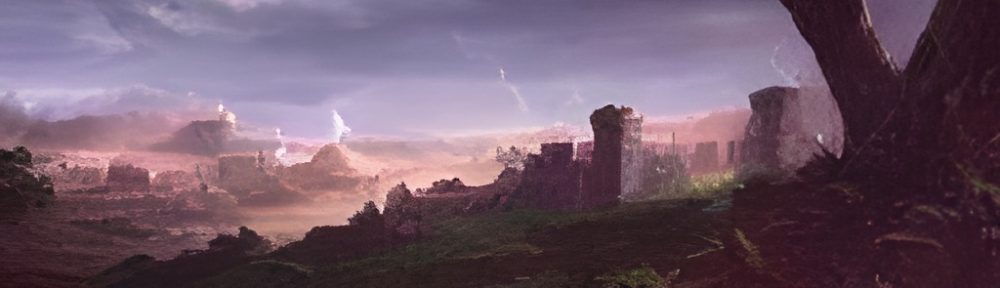
New cards and balancing, and a quick treatise on why a lot of the characters in Zizerax look the same (and the limitations of working with Stable Diffusion).
New Cards
In my playtesting, it was clear that holy and mire fighters needed company. Many of the fighters I had were built to compliment other holy/mired fighters, or to directly benefit fighting holy/mired fighters.
I’ve made new cards, and we’re now at six mired and six holy, which balances things out pretty nicely. I’ve done another print of a test deck and I’m very happy with the results. I implemented a lot of the balancing notes that I had made, and everything feels a little more even. The biggest improvement, the 3-action turns, has totally change the game and given me a lot of confidence.
Diversity
If diversity in card games isn’t something you care about, you can pay this section no mind. I appreciate you being on the site and being involved in the game, and you don’t need to care about this to enjoy the game.
I do care about this though and it’s something I need to try to do to feel good about the game.
The Bad
I’m using Stable Diffusion to generate all the art for Zizerax. The prompts I’m using generally describe the fantasy race (orc, elf, human), what they look like, what they’re doing, where they are, and a reference art style. This will usually give me fairly good results, especially if it has some point of reference for what I want to make, like other pieces of fantasy art that have elements of my prompt. There are tons of depictions of elves in fantasy tabletop games, so it’s very easy for Stable Diffusion to synthesize an elf in an environment doing an action.
There aren’t a lot of depictions of elves with dark skin though. When I ask Stable Diffusion to do rendering of a fantasy character with darker skin, I generally I get one of three results.
- A jumbled mess. The person it generates will be blurry, uncanny, or too sloppy to include in the game.
- The image will be in a totally different art style. Usually it will look more like a photo than the detailed painted style I’m going for, or, it will look like something made on Deviant Art in 2012.
- The image will be racist. I won’t go into details here, but even the most innocuous prompts can generate images that I wouldn’t dream of putting in the game.
Stable Diffusion isn’t pulling anything out of thin air. It’s drawing from an existing body of work, work that it was trained on. In that body of fantasy artwork, the overwhelming majority of characters are white.
When I ask Stable Diffusion to generate characters who aren’t white (and yes you have to go out of your way to ask because it will never generate a non-white fantasy character on its own), it has to grasp at straws and draw from other sources. We end up in case 1 when Stable Diffusion draws a blank, case 2 when Stable Diffusion tries to combine the fantasy style with a depiction of a person of color that doesn’t match the art style, and we end up in case 3 because Stable Diffusion was trained on content from the internet, and, surprise surprise, there’s a lot of racist content on the internet.
The Good
One place I think I did a good job is including women in the game. It has not been easy. Stable Diffusion has issues creating fantasy art that depicts women, in a slightly different way than it has trouble depicting people of color.
It takes a lot of trial and error to generate women that aren’t in armor that looks like two piece swimsuits. You have to be very specific with the prompts to get them in a reasonable amount of clothing and to have their proportions not cause them horrible back problems. With persistence, I have been able to generate many female fighters with the same diversity of body types the male fighters have. And all of them are wearing realistic amounts of clothes, which I consider a triumph.
Going Forwards
I think representation is really important and that being able to look at a piece of media and see someone who looks like you can have a profound impact on kids. I want to do better. I think I have been reasonably effective in creating a gender-diverse game, but not very effective in creating a racially diverse game.
If I can raise an obscene amount of money in the Kickstarter, I’m going to hire artists to redo some or all of the art. I would do this in part because I have some ethical misgivings about using Stable Diffusion for the game, and in part because I genuinely don’t think I can produce a diverse game without using human artists. With a lot of care and trial and error you can create female characters who aren’t overtly sexualized. With an artistic vocabulary that I don’t have, it might be possible to create a more racially diverse game, but I don’t have it, and frankly, I would rather fix this problem by paying actual artists than by using a tool that uses their work without paying them.
One more thing
I harp on Stable Diffusion a lot in this post. Stable Diffusion is an amazing tool that has made this card game possible in the first place. I owe it a serious debt of gratitude. I’m in the process of writing a more in depth post about my thoughts on using Stable Diffusion in Zizerax, so stand by for that.